
Blog
The Bombing of the Victoria Hotel in Saigon
Oct
This is a historical subject related to the Vietnam War and intelligence activities in Saigon. To provide an accurate account of the incident, it is necessary to establish the exact date, the location of the hotel, and the individuals involved, as the hotel’s name may be recorded differently in historical sources.
This account will focus on the historical background, documented events, consequences, and historical significance of the incident, without dwelling on graphic or sensational details of violence.
Historical Background
The bombing of the Victoria Hotel took place on April 1, 1966, during the Vietnam War.
The hotel was located on Tran Hung Dao Street, in the Saigon–Cholon area at the time. The building was used to accommodate U.S. military officers serving in South Vietnam. According to a historical account published by HistoryNet, approximately 200 American officers were staying at the hotel.
The Course of the Bombing
According to published historical accounts, the attack took place in the early hours of the morning, while many of the hotel’s occupants were still asleep.
- Before the explosion: The area around the hotel was guarded by U.S. military police and Vietnamese police officers. However, these security measures failed to prevent the attack.
- The attack begins: The attackers used vehicles to approach the hotel. Another group opened fire on security personnel and nearby military positions.
- The explosion: A vehicle carrying explosives approached the hotel entrance. A U.S. military police officer named Patrick J. Brems attempted to push the vehicle away from the building before the bomb exploded.
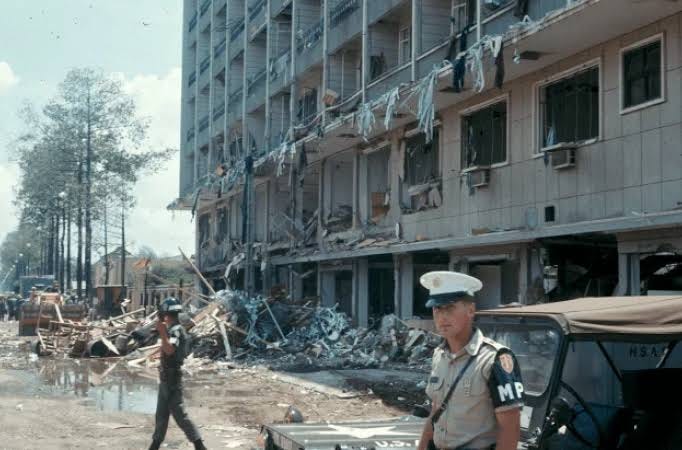
- Partial destruction of the building: The force of the explosion severely damaged the ground floor and the hotel’s façade. Windows, walls, and other structural elements were destroyed, while nearby buildings and shops were also affected.
Casualties and Property Damage
The bombing had serious consequences:
-
- Loss of life and injuries: A historical photographic record from Vietnam reports that six people were killed, including three Vietnamese civilians and three U.S. military police officers, while 67 others were injured. Figures may vary among historical sources depending on their methods of reporting and classification; therefore, these numbers should be understood as figures recorded by a particular source.
- Damage to buildings: The hotel’s façade and lower floors sustained extensive damage. Numerous nearby shops and residential buildings were also affected.
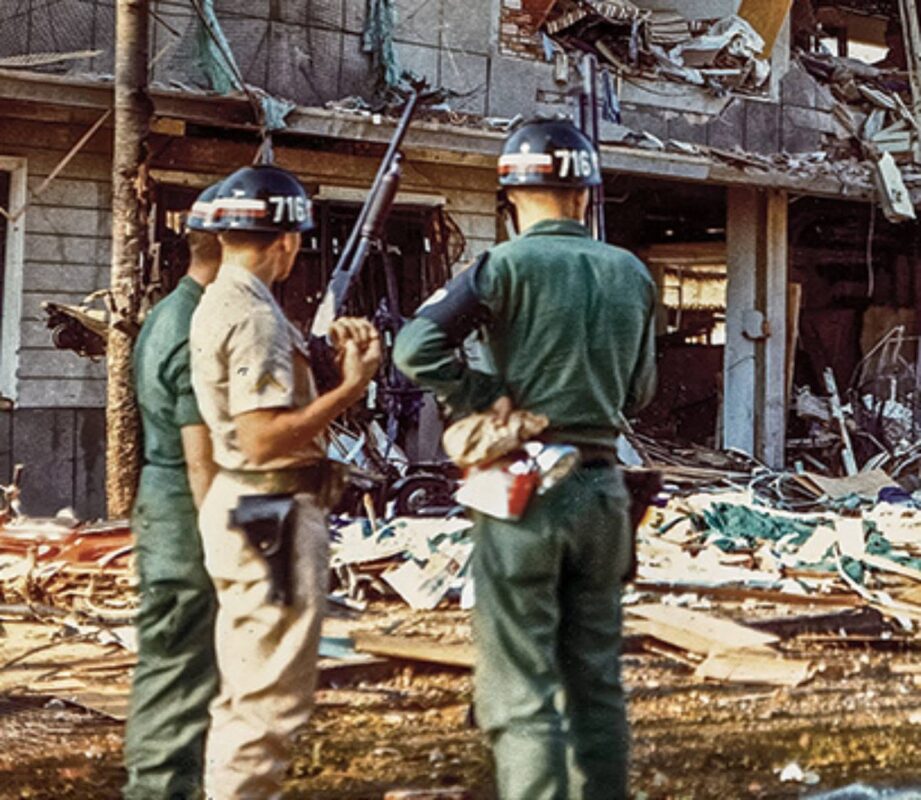
- Rescue operations: Firefighters, military police, and other personnel arrived at the scene to assist the injured, secure the area, and manage the aftermath. Archival photographs show security personnel standing guard among damaged buildings.
Who Carried Out the Attack, and What Was Its Objective?
According to the historical sources cited above, the attack was attributed to Saigon-based commando units associated with the revolutionary forces in South Vietnam, commonly referred to in English-language sources as the Viet Cong.
The hotel was targeted because it was being used to accommodate American military personnel. The incident occurred against the backdrop of a wider pattern of wartime attacks on facilities serving the U.S. military in Saigon.
It is important to distinguish this incident from other hotel bombings in Saigon, particularly the bombing of the Brinks Hotel on December 24, 1964, and the bombing of the Metropole Hotel in late 1965. These were separate incidents, although both also involved targets associated with the U.S. military.
Historical Significance
The bombing of the Victoria Hotel illustrates several characteristics of urban warfare in Saigon during the 1960s:
- Military facilities were interspersed with residential areas: An attack directed at a military target could also cause casualties and damage to nearby civilian properties.
- Urban security was a major concern: Attacks on hotels and other facilities serving military personnel made the protection of U.S. military personnel in Saigon an increasingly important security concern.